Blog

28 Apr
0

It’s all about a relationship

This week, St. Andrew’s began its life-long learning series that focuses on healing and reconciliation.

United Church of Canada Reconciliation and Indigenous Justice Animator Lori Ransom – an Indigenous woman who also serves as an ordained elder in the Presbyterian Church in Canada – talked about relationships.

The relationships predate residential schools, which date to the 19th century. The relationship with the Indigenous peoples goes much further back, to about 500 years ago when explorers first landed and began mapping the continent and preparing it for settlers.

“It is about relationships and the quality of relationships we’re working on. The work is to work through the wounds of history,” she said.

The wounds.

“Can you imagine not being able to leave the small area where you lived without a pass from an Indian agent?” she said, as she introduced the context of the government policy framework designed to coerce the Indigenous communities to conform to the Eurocentric customs being imported.


Government policies banned chiefs from meeting, communities from gathering for spiritual ceremonies and customs like potlach and sun dances.
Residential schools were a part of the conformity work as they took children from their homes and taught them in a foreign language, far away from their parents and natural support systems.

Children didn’t attend their nearest residential school; they were usually taken far away. “When  you realize kids from Sarnia were being taken to near Sault Ste. Marie , something’s up. That something is that it was recognized that kids needed to be taken away from their parents to learn English or French and learn Eurocentric traditions.”

The trauma was felt not just by the kids. Imagine living in a community without any kids – no laughter, no kids playing games in the yard, no youthful energy. Undoubtedly it was traumatic for parents and those left behind as well.
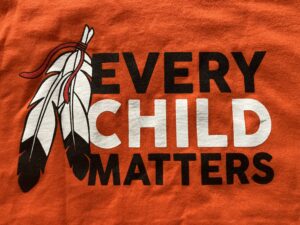
It is indeed about relationships.

And any territorial acknowledgement includes words to the effect that we are committed to building a relationship based on respect and cooperation.

A relationship includes an acknowledgement that the other person has something to give you and to teach you.

So as we begin the series, available on our website and YouTube https://youtu.be/UXisoMeZGgM, let’s all consider how we can build a relationship:

Do we want to learn about Indigenous culture? A visit to the library and looking for an Indigenous author would give insight; the Barrie Public Library has Indigenous authors’ works on CloudLibrary.

The University of Alberta has a course, offered free on Coursera, that explores so many topics and uses the arts and music to make the online learning engaging.https://www.ualberta.ca/admissions-programs/online-courses/indigenous-canada/index.html

Or more locally, the Barrie Native Friendship Centre offers events. Go meet people. Learn. Start a conversation.

It’s all about a relationship. And relationships are personal, unique and something each one of us can do.

Together, let’s move forward and build a new relationship based on healing and respect. We can change ourselves and together, we can change our corner of the world.
Read More
24 Apr
0

What wondrous love and peace

There are rainy days, damp days and sunny days.

It’s a whole lot easier to give thanks and praise when the sun is shining and we can feel the warmth of the sun and see the energy encourage  flowers to spring up in our parks and in our gardens.

But some days are damp and dark – whether because of the weather or what we are dealing with ourselves. ‘

Yet God’s warm love and sustaining peace are still with us, whether we can feel  it or not. God’s love makes incredible things happen inside us and outside of us – if we choose to let it.

“What a wonderous time is spring, when all the trees are budding. The birds begin to sing; the flowers start their blooming. That’s how it is with God’s love, once you’ve experienced it…” goes a well-loved Christian camp song that our minister even sang during our sermon this morning.

Here’s a rendition of it on YouTube https://youtu.be/BCjR4dlY33k

So in every day, look for God’s light and love. If you can’t see it or feel it, that’s OK; pray to God and ask for help in seeing it and feeling it.

Believe it; Jesus lived, died and rose again – and lives – for you and for me. Incredible power. Incredible love. For you and for me.


Read More
21 Apr
4

Join us on our reconciliation journey

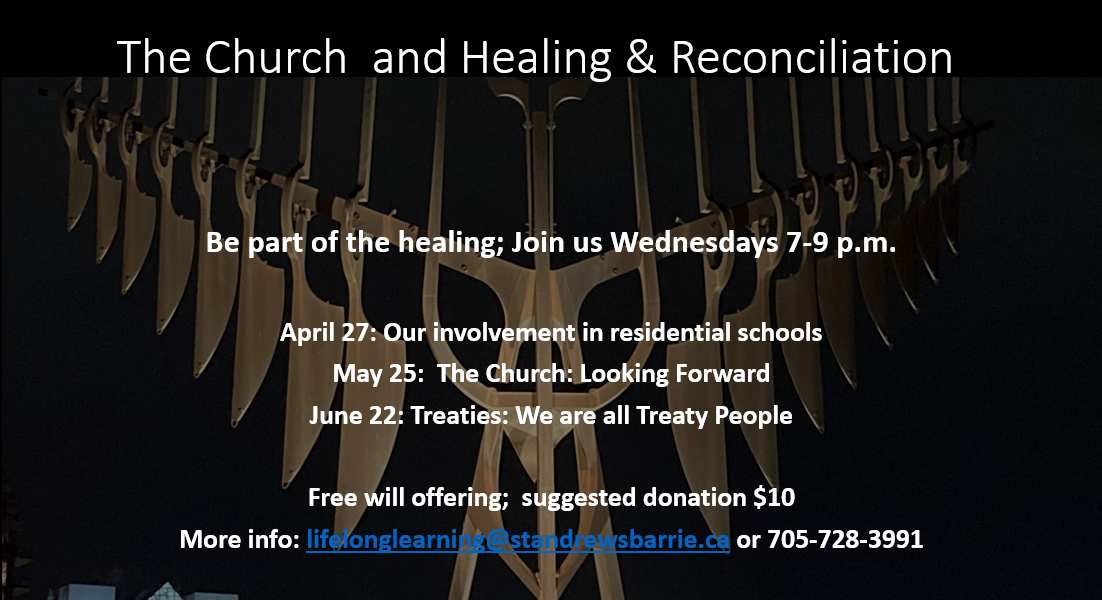
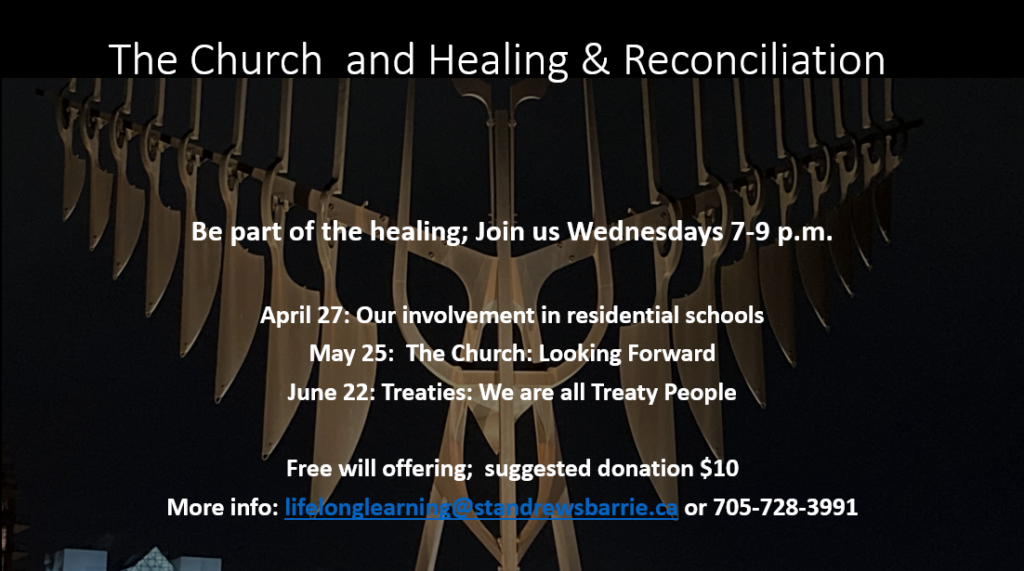
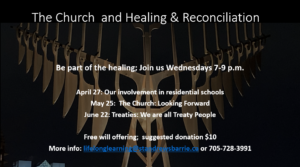
Next week, our spring life-long learning series – which focuses on healing and reconciliation with our Indigenous neighbours – begins.

The timing is interesting, as yet more unmarked graves were found at another residential school. Churches, including the Presbyterian Church in Canada, ran these schools for the government as part of a shameful colonialist strategy. The Presbyterian Church in Canada has apologized for its role; you can read more at https://presbyterian.ca/healing/

Our national church is working with our ecumenical partners as we respond to the  Truth and Reconciliation Commission’s 94 Calls to Action, including support for the implementation of the United Nations Declaration on the Rights of Indigenous Peoples.

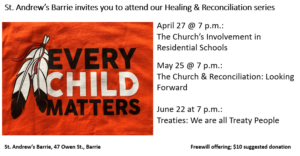
Our spring speaker series is our effort to help others in our church and in our community and beyond understand the church’s role in residential schools and how to move forward. We also acknowledge treaties and the agreements made, and we are endeavouring to understand what they mean for us today.

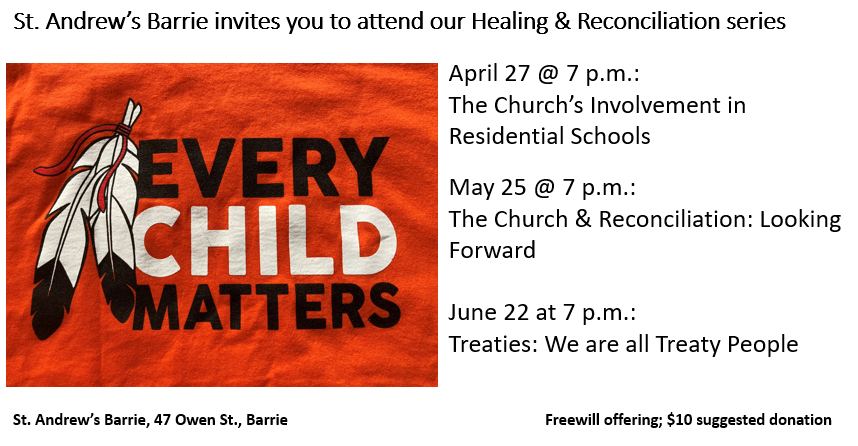
Starting next Wednesday – April 25 – and continuing the fourth Wednesday of May and June, the series brings Indigenous voices to help us understand the legacy and how each one of us can help  on the healing and reconciliation journey.

The presentations, which begin at 7 p.m.,  will also be livestreamed on YouTube and the videos posted to our website and YouTube channel. A free will offering will be collected, a suggested donation of $10.


April 27: The Church’s Involvement in Residential Schools

United Church of Canada Reconciliation and Indigenous Justice Animator Lori Ransom brings insights from her work, which includes a position as the Truth and Reconciliation Commission’s senior advisor for Church and Interfaith Relations. With a passion for mission, social justice and healing, she also served as Kairos’ delegation to Israel/Palestine in 2019, and in various leadership positions with Indigenous and Northern Affairs Canada and the Aboriginal Education Council of Centennial College.

May 25: The Church and Reconciliation: Looking Forward

Rev. Dr. Margaret Mullin has worked in Indigenous ministries and congregations in the Presbyterian Church in Canada, including 19 years as the executive director of the Winnipeg Inner-City Mission. With her Indigenous name, Thundering Eagle Woman, Rev. Mullin has always thought about what it means to think, see and be with “Two Eyes” in a predominantly Eurocentric society. She currently serves at Place of Hope Presbyterian Church in Winnipeg.

Rev. Linda Patton-Cowie serves at St. Mark’s Presbyterian in Orillia, and she brings experience from being a former convenor of the Healing and Reconciliation Advisory Committee, chaplain for the Healing and Reconciliation Journey and a chaplain of the Rainbow Communion.

Ernestine Baldwin is the Elder Advisor at the Barrie Native Friendship Centre and a Visiting Elder at Georgian College’s Indigenous Resource Centre. She recently received Georgian College’s Award of Excellence for teaching and preserving the Anishnaabemowin language.

June 22: Treaties: We Are All Treaty People

Roger Townshend has practised Aboriginal rights, constitutional and human rights law. He currently litigates land claims and is lead counsel in a matter regarding Aboriginal title in the Great Lakes region. He has provided commentary on a variety of proposed federal and provincial legislation on behalf of Indigenous clients. He is included in The Best Lawyers in Canada and the Canadian Legal Lexpert Directory. More info is at www.oktlaw.com/team-members/hw-roger-townshend/

Dan Shaule has studied treaties in Ontario and written and advised on large-scale cases involving land claims and treaty rights. He is an Indigenous Studies professor at Seneca and Durham colleges, and his published works include articles on the Williams Treaties and how to engage Indigenous communities.


Read More
17 Apr
0

Waiting to see the risen Lord

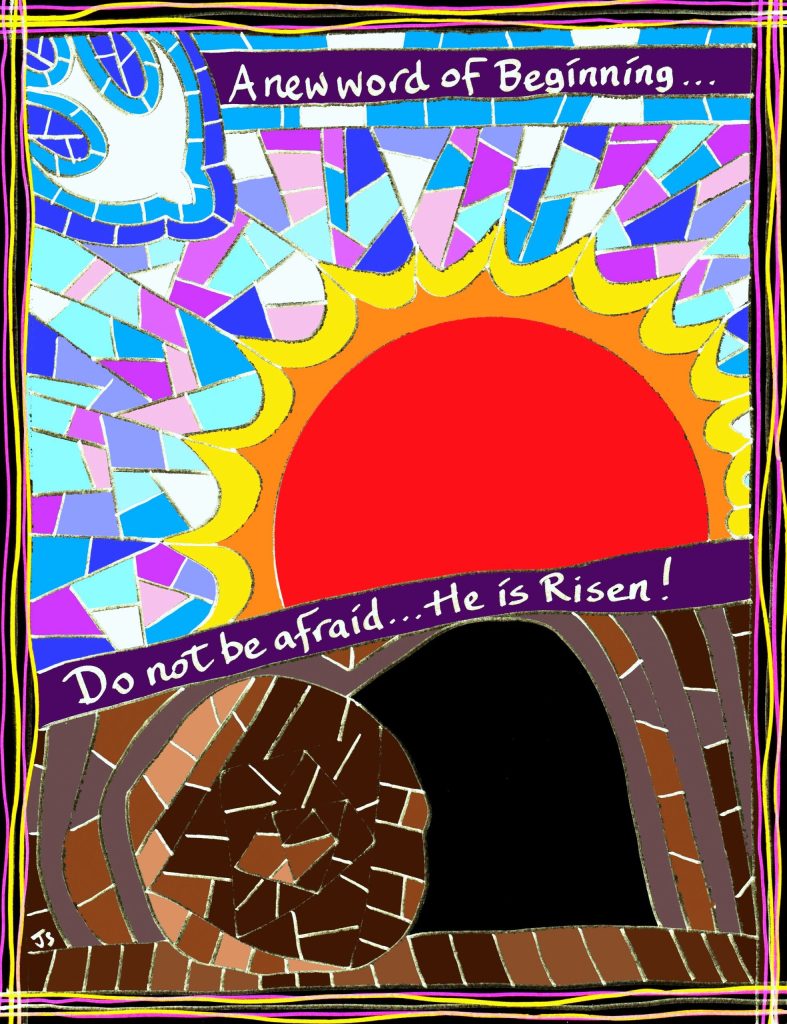
The brass and the trumpets, the triumphant hymns and hand bells were all part of our celebration of our Lord’s resurrection today.

There is indeed incredible hope and joy in knowing that after He suffered and died, Jesus rose again.

The past week has been one of incredible emotion and some call last Sunday, Passion Sunday. As we journeyed together, we experienced highs and lows, but in our time, we knew full well the story would end as Jesus brings us new life.

But let’s rewind and slow down a bit. The women who went to the tomb where Jesus was laid were worried about how they’d roll away the stone. They were wrapped in their grief and loss and they wanted to do what their culture and religion required them to do: anoint the body with spices. They were greeted by angels, who told them Jesus was alive, and off they ran to tell others. It is easy, and often convenient, to stop here.

But let’s linger at the tomb with Mary Magdalene, who was still in tears and feeling oh so alone.

Let’s contemplate the grief, the sorrow, the feelings of a future lost (or so it seemed).

How human is this?!

There are families who have recently learned a loved one has incurable cancer.

There are those who may be facing challenging economic realities and who struggle to keep the basics on the table, let alone the feast our culture tells them is appropriate for the day.

There are those who are still in lockdown because the last wave of Covid entered their residence and therefore they can’t see family or friends, except perhaps by Facetime.

There are those who have lost family members, with this being the first Easter without the traditional dinner and time together. Some may feel cut off from loved ones, because of the choices they made, good or bad, necessary or unnecessary.


We join Mary as she lingers a little longer at the tomb and contemplates the loss of what she, and we, dreamed life would be like.

But in being fully human, Jesus understands our sorrow.

And as we wait for Him, we know He will call our names, as a shepherd cares for his sheep.


Peace is not the absence of sorrow or challenge or trial. Peace is having Jesus with us.

He is not in the tomb. He is alive and He waits for you and for me. Let us turn and see His face and follow Him. Let us share with those who linger at the tomb in their struggle and sorrow and help them to wait upon the Lord.

His goodness and His gifts are for all of us.


Join us on the journey in our worship at https://youtu.be/UAZDSI4UYi4

Read More
14 Apr
2

Jesus keeps it simple: Love one another

Today is Maundy Thursday.

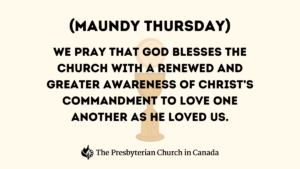
Maundy is actually a translation of the Latin word “mandatum”. In John 13, Jesus gives His disciples a new commandment – in Latin, mandatum novum: Love one another as I have loved you.

This is our mandate, as Christians: to love others with a generous, life-sharing, deep affection for others. This love inspires us to want the best and work for the best for others, as tough as that may be, as counterintuitive as that may be in our culture.

lt is knowing that we all are on our human journey, a journey that includes challenges, sorrows and joys. We are together in this as we discover ourselves and what we bring to our world.
As we take time to be with others this weekend, let’s remember the example Jesus gave us: On this day, He washed the grit and grime of the day and the city off His disciples feet before they sat down for food and fellowship.

Love one another is the key message of Easter, as Jesus shared His life with His disciples, including one who would ultimately set Him up for the dramatic, painful events to come. Imagine knowing the betrayal was going to happen shortly, yet continuing to share food and fellowship with this individual and other friends. What an incredible example of acceptance and love.

So let’s each consider Jesus’ commandment: Love one another as I have loved you.

“As I have loved you” is incredibly inspiring. Tap into it, the just do it: Love one another.

Read More
10 Apr
0

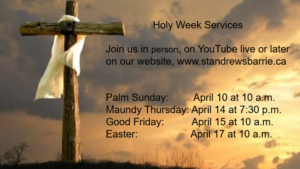
Let us journey together this Holy Week

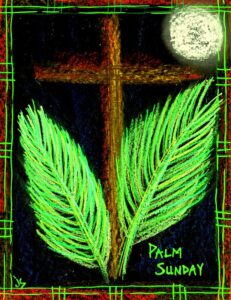
Jesus’ triumphal entry into Jerusalem is over; the palm branches and loud Hosannas are in the past.

And we begin a contemplative week in which the divinity and humanity of Jesus are fully revealed.
Some called Sunday “Passion Sunday.” Indeed, the entire week is filled with passion – the loud hosannas, the intimacy and love shared at the Last Supper, the shock of betrayal, the callousness of the events leading  up to the Crucifixion.
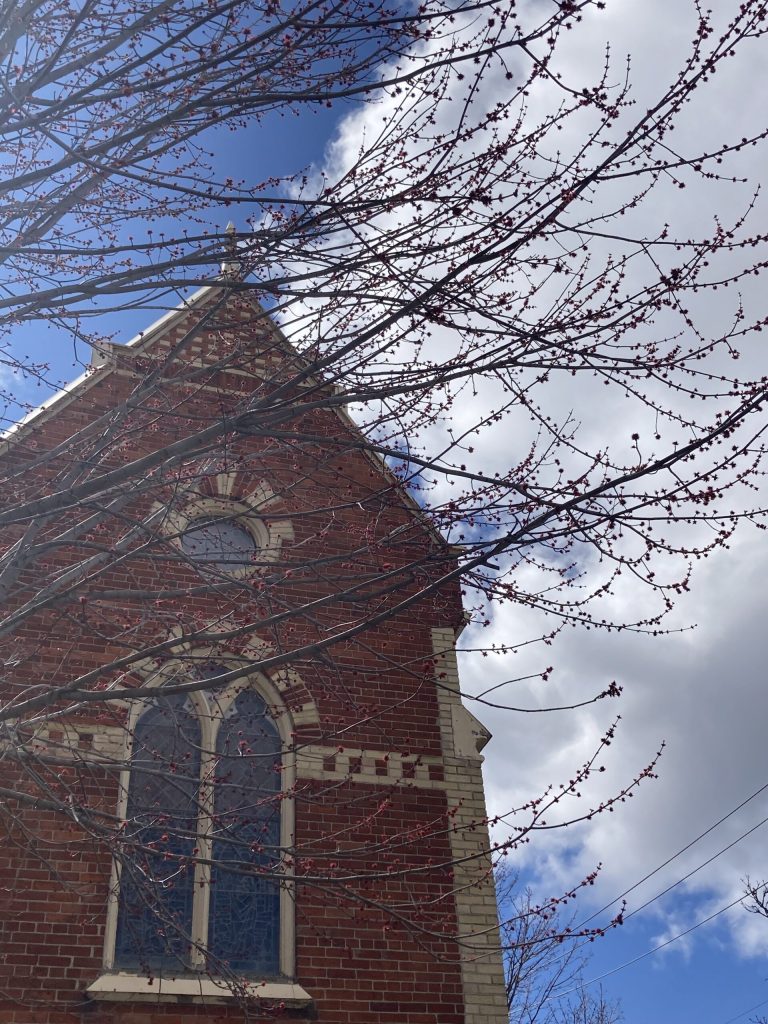
At St. Andrew’s, we remember the incredible music that included darker pieces that foreshadowed what the week would bring. This year, after two years of not being able to gather in person, our children and young people waved palm branches as they paraded through the sanctuary. We recalled the humble entrance Jesus made into the Jewish capital city, quite in contrast to the governmental and establishment powers. We know, however, Jesus reigns.

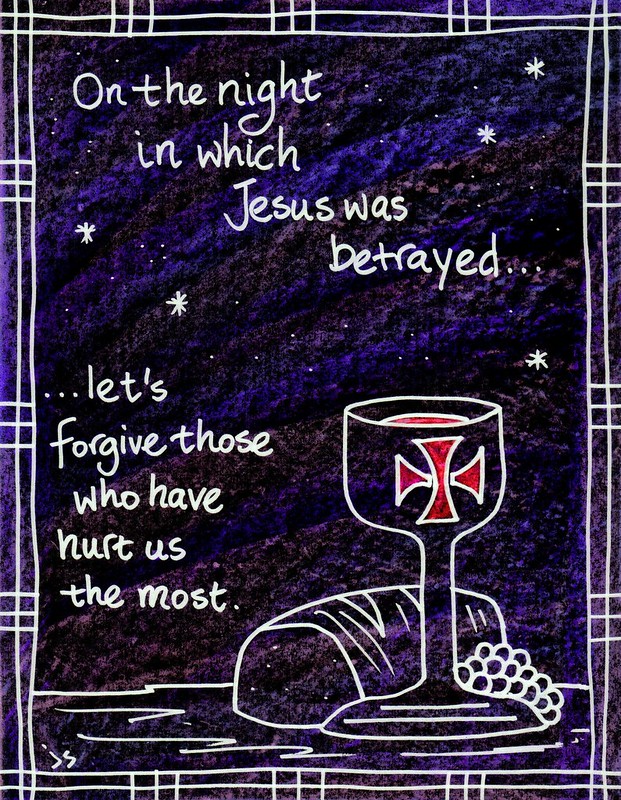
As the week progresses, we will move towards Maundy Thursday – the day on which Jesus gave us the greatest commandment: We remember that Jesus washed his disciples feet. Stop and think about that: wearing sandals, the disciples surely had dirty, dusty feet, feet that perhaps encountered the less savoury aspects of the animal life in the city.

As Jesus washed his disciples feet, He gave them a new commandment: A new commandment I give unto you, that you love one another as I have loved you.” (John 13:34)

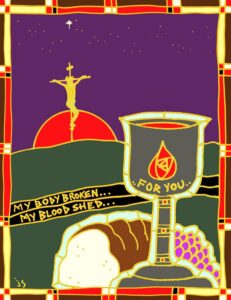
The next day, we would surely see that love as Jesus suffered, went to Calvary and shed His blood for us.


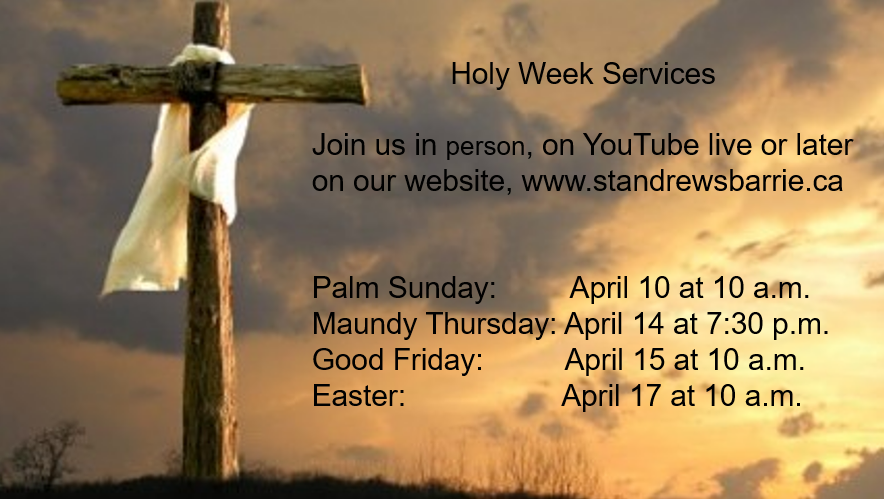
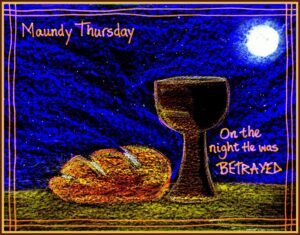
Join us Thursday night as we celebrate the Last Supper together and recall Jesus’ love and sacrifice for us.

Then let us look towards Calvary and consider the love.

And in the dark hours, remember that the Light of the World lives.

Join us at Thursday night at 7:30, then on Sunday, Easter, at 10 a.m.

Until then, let us fast from worries and have trust in God, fast from pressures and be prayerful, and fast from selfishness and be compassionate; just as Jesus loved us, we love one another.


Read More
07 Apr
1

Creativity, getting messy and new work

God is doing new work in us – and over the past several weeks, our Art Guild has been exploring new ways of how the Creator can help us be creative and express ourselves.

Art for the Heart explored colour theory, alcohol inks and mosaic tiles and squares. It was an interesting six-week series that had participants playing with crayons and pencil crayons to assess colours and how they work together. It was essential information for alcohol inks, which was an incredible exploration of colour and texture.

Alcohol-based inks are what are used in Sharpie and other permanent markers. They’re readily accessible and can be blended and textured easily with everyday items such as cotton balls, straws, felt and stamps.

An Art Guild veteran created a naturescape, with purple hills that meet the sky in the distance, as well as gentle verdant slopes and trees. It’s reminiscent of Psalm 23, where our Shepherd takes us to lie down by the stream and rest.

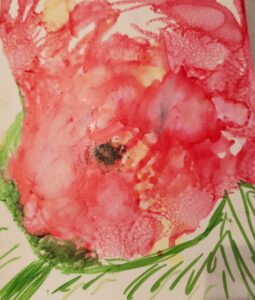
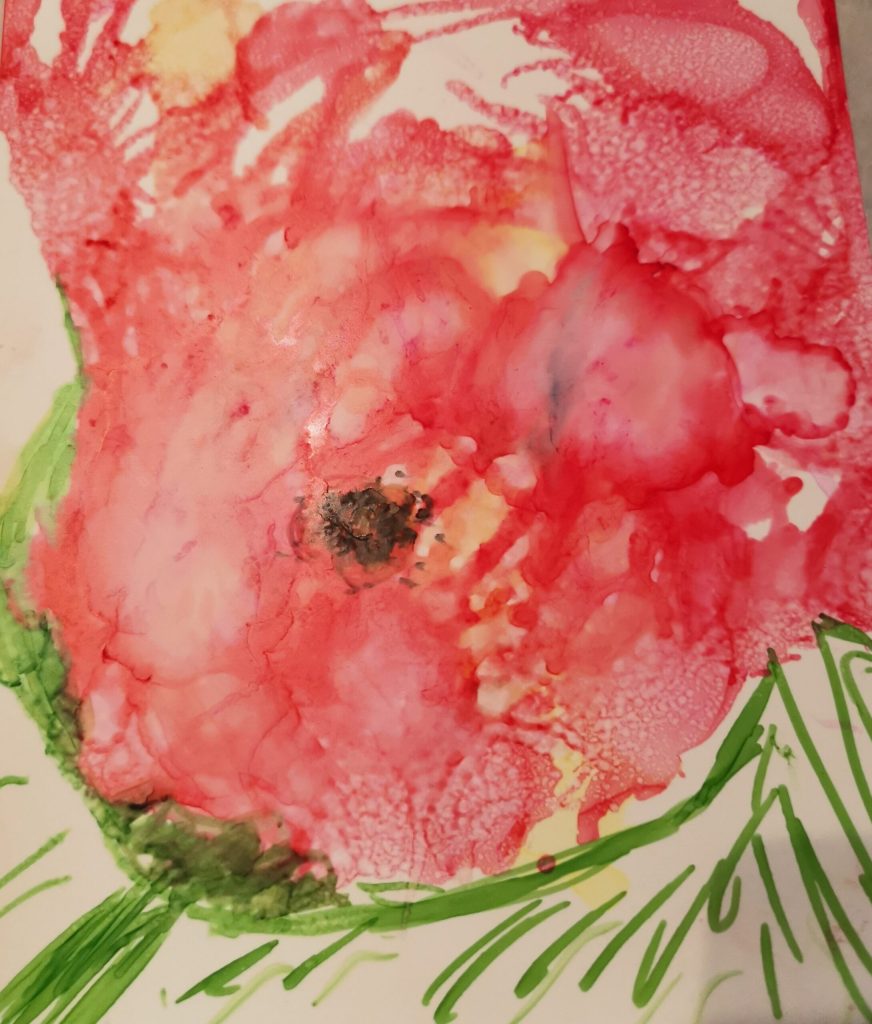
The same artist  – known for her love of plants and walks in nature – took a closer look at flowers as she worked in class.

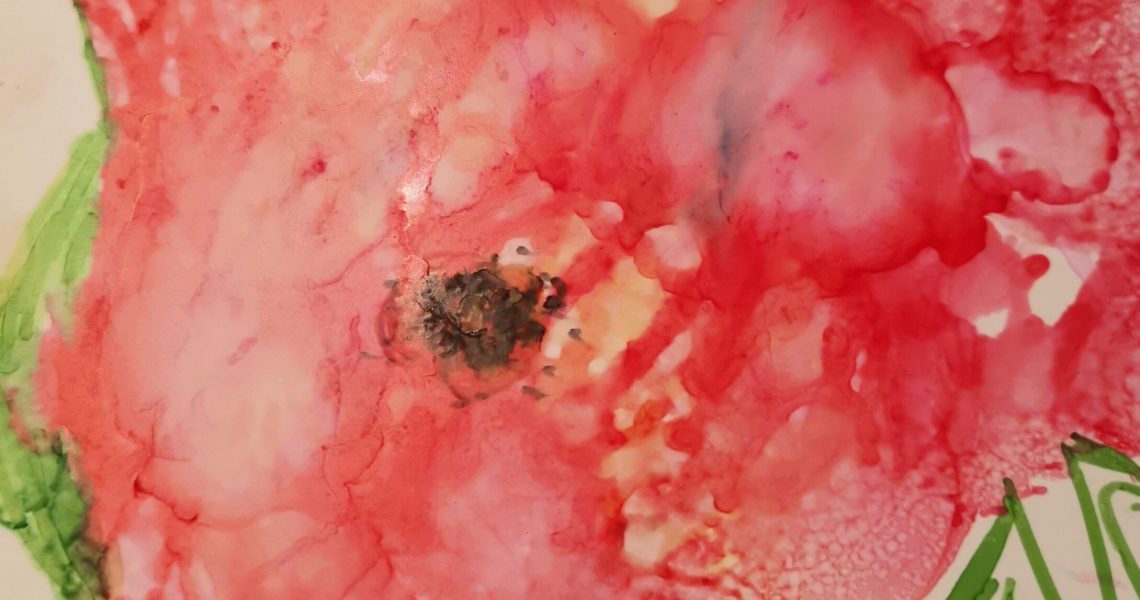
She spread the red alcohol-based ink on her tile, initially likely by blowing, a technique used in making flowers with alcohol inks. Many participants commented that their flower emerged and took shape in ways they hadn’t planned or imagined as the ink spread across the tile in whisps and circles. Artists added texture with a spray of alcohol or blending solution.  Using Sharpies or a similar marker, they added lines and dots to create focal points and leaves to enhance what would become the petals of the flower.

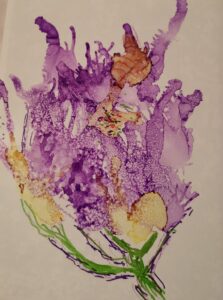
The purple creation features texture and colour that we are starting to see in our gardens and have eagerly awaited for months.

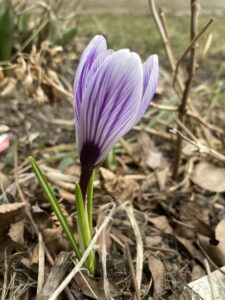
Just a couple of weeks later, bulb flowers begin to sprout through the still-cold soil and add colour in surprising spots around us.

Being courageous enough to get messy, explore and see what happens (or letting go of control and imagining what is emerging) are incredible gifts that our Creator God gives us and encourages us to accept and use.

As our gardens begin to spring to life again, let’s be thankful that God is doing a new work in us and around us.


Read More
03 Apr
0

God is doing a new thing – in you, in me, in us

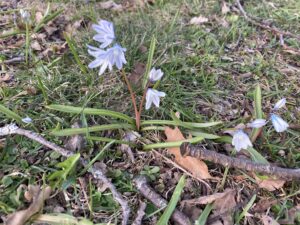
Now that the snow has almost all melted, we can see the blooms of the snowdrops and crocuses and the shoots of early bulbs like tulips poking towards the sun.

It’s a hopeful time of year.

And it’s how God works, not just in our gardens but in us and in our communities.

Isaiah 43 tells us how God led His people and reassures them He is at work. Starting at verse 16:

This is what the Lord says—
    he who made a way through the sea,
    a path through the mighty waters,
17 who drew out the chariots and horses,
    the army and reinforcements together,
and they lay there, never to rise again,
    extinguished, snuffed out like a wick:
18 “Forget the former things;
    do not dwell on the past.
19 See, I am doing a new thing!
    Now it springs up; do you not perceive it?

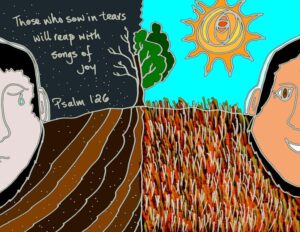
It is one the psalmist, King David, is thankful for. Those who sow in sorrow will reap with songs of joy. Just imagine: you’re going through a tough, sad time yet you go in faith and sow – sow seeds, sow hope, begin working on a project. In these uncertain times, investing time or energy in anything can seem like a gamble.

To know that God is at work and doing a new thing is so inspiring.

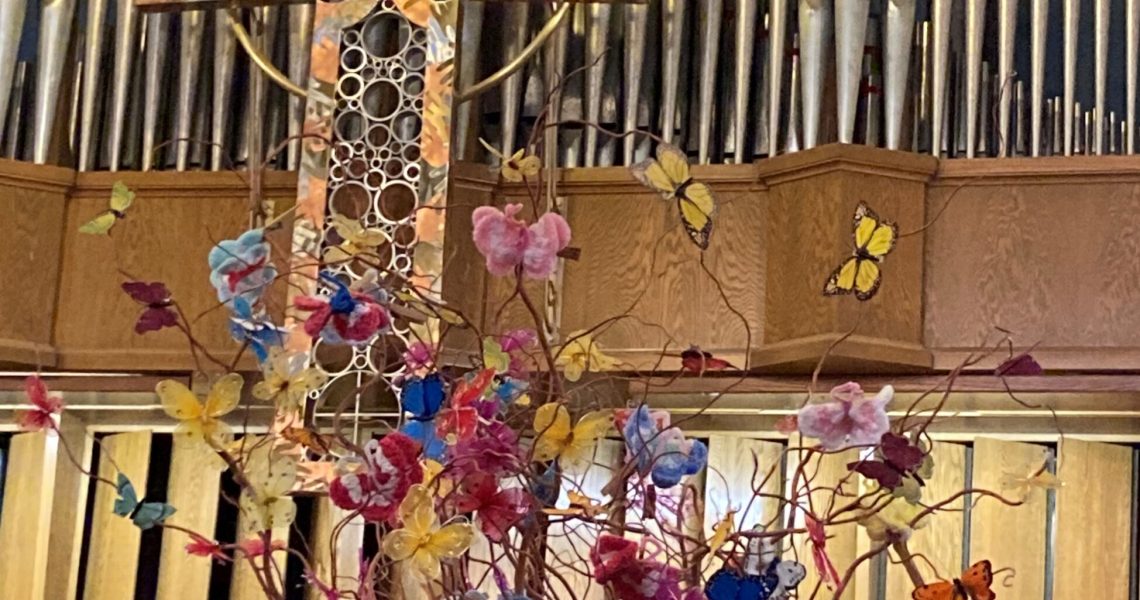
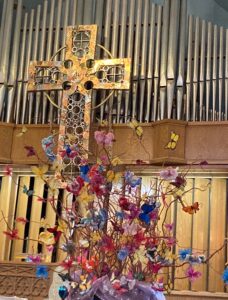
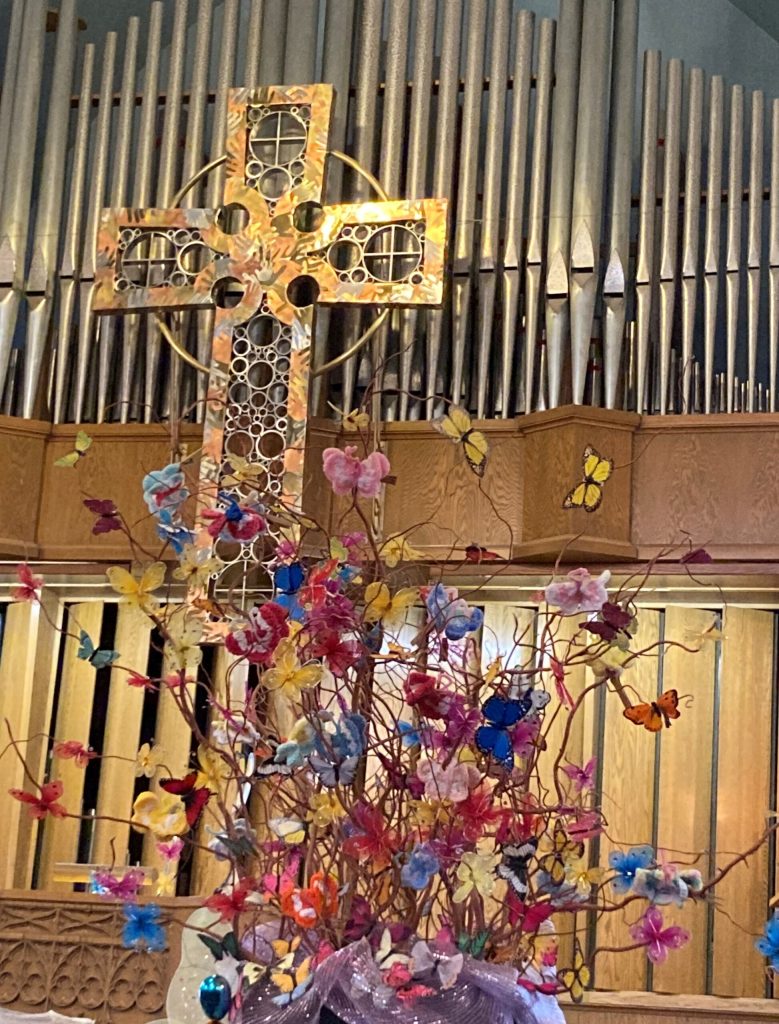
At St. Andrew’s this week, we dedicated our Butterfly Tree. The Women’s Missionary Society ran this fundraiser to support an array of projects and organizations in Barrie and beyond.

Each butterfly represented an investment in hope. The tree is a collection of many people’s hopes and investments and faith that God will do a new thing.

Each one of us can take a step towards new – new relationships, new projects or simply choose to learn and consider how we can be part of something new and better.

One option is to consider us on our journey of healing with our Indigenous neighbours.  On the fourth Wednesday evening of April, May and June, we are hosting a speaker series that will undoubtedly provide insight from Indigenous leaders about the trauma of residential schools and what we can do to increase understanding and enhance healing and reconciliation.


Read More
31 Mar
0

Every child matters – and it matters that we all learn

As Association of First Nations former chief Phil Fontaine told CTV News “We’re all in this together.”

He was in St. Peter’s Square earlier this week, after meeting with the pope about the legacy of residential schools.

We are, indeed, all in this together.

We are also on the journey of healing and reconciliation, together.

The place where Fontaine is a beautiful history-filled square.

Where he is coming from is a place of trauma, of secrecy, of pain. The legacy of residential schools is a painful one which includes hundreds of unmarked graves.

It includes memories of not just those who attended the schools, but of their parents and siblings, aunts and uncles. These family members were left behind as loved ones came back damaged or never came back at all. It is heart-breaking to consider the years that this occurred, even as recently as the late 1960s, when children were “scooped” away.

As one of the churches that ran residential schools, the Presbyterian Church in Canada is complicit in the efforts to colonize peoples who lived their lives on the land and extinguish their language and culture. Along with other churches, we encouraged the government to ban Indigenous spiritual practices through which Indigenous peoples experienced and worshipped the Creator. We confess our cultural arrogance and our failure to represent our Saviour, who extends love and grace to people, wherever they are on their human journey. We are sorry for the horrific experiences some endured at schools. More details about the church’s confession can be found at https://presbyterian.ca/healing/

Healing begins with a genuine expression of regret, of being sorry, of wanting to change. Our Indigenous communities can teach us more about restorative justice, which begins with that genuine sorrow. Indigenous Canada offers a course that helps us understand more about this. Learn more about it at https://www.ualberta.ca/admissions-programs/online-courses/indigenous-canada/index.html

At St. Andrew’s, we are committed to moving forward with respect as we work towards healing and living and working together. This includes helping others understand the legacy left by residential schools and learning from Indigenous teachers.

Our spring speaker series focuses on healing and reconciliation and not only discusses our role in residential schools, but we will also be learning about treaties and what we can do to build relationships with our Indigenous neighbours.

Our guest speakers include a Barrie Native Friendship Centre elder, an Indigenous advocate who has worked on land claims and a Presbyterian elder who serves on the Aboriginal Education Council of Centennial College.


The presentations occur on April 27, May 25 and June 22 – all Wednesdays, evenings at 7 p.m. The series will occur at St. Andrew’s and also be recorded and posted to our YouTube channel.

“Central to all of what has transpired over the years, in addition to abuse in residential schools, is the land,” said Fontaine, “the land taken from us.”

Our spring speaker series is part of our work to build understanding and heal.

The speakers – many Indigenous – occur the fourth Wednesday of April, May and June at 7 p.m. Join us as we journey together.

Read More
27 Mar
0

We’ve all made mistakes, but we’re all welcome

Perhaps the only thing not welcome today was the return of wintry weather.

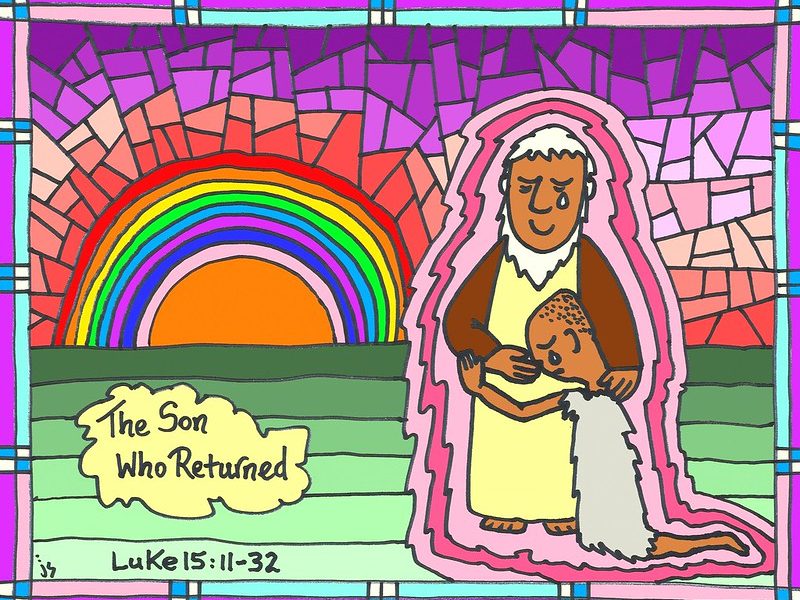
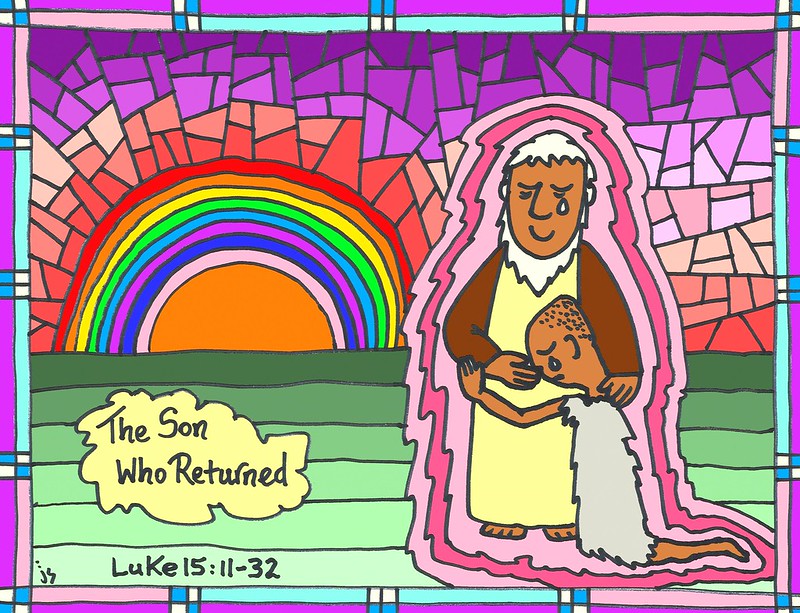
Today, we contemplated the parable of the prodigal son, the story of a father welcoming back a son he thought was long gone, perhaps dead. The son took his half of his inheritance, spent it rather wildly and when tough times hit, realized his mistakes and the mercy of his father. His older brother wasn’t so keen on his father celebrating the return of his younger sibling.

Let’s look at the three characters:

The younger son: Entitled, seeking pleasure and status, he takes what is his and wastes it. He makes a series of bad choices. But, and there’s a but, he learns from it. He recognizes he squandered what his father gave him. He realized the error of his ways.

The father: loving, he welcomes his son back, after the son admits the error of his ways.

The older brother: Never leaving his father’s side, he doesn’t understand how his father could overlook what the squanderer had done.

But God is faithful and just and will forgive us, when we confess the error of our ways.

After confessing our ways, we have access to an incredible inheritance: A God who is faithful, who enjoys spending time with us, who loves to laugh and create with us.

We have the assurance of not only being forgiven, but of protection in the midst of life’s uncertainties and challenges.

Thanks be to God.

And if you’d like to show your gratitude, join our WMS in supporting local charities that help others rebuild their lives – organizations including Youth Haven, the Women and Children’s Centre and the Listening Post. The Butterflies of Hope campaign runs until April 2; e-transfer barb@standrewsbarrie.ca, and donations of $20 or more will receive a tax receipt.


Read More
678912